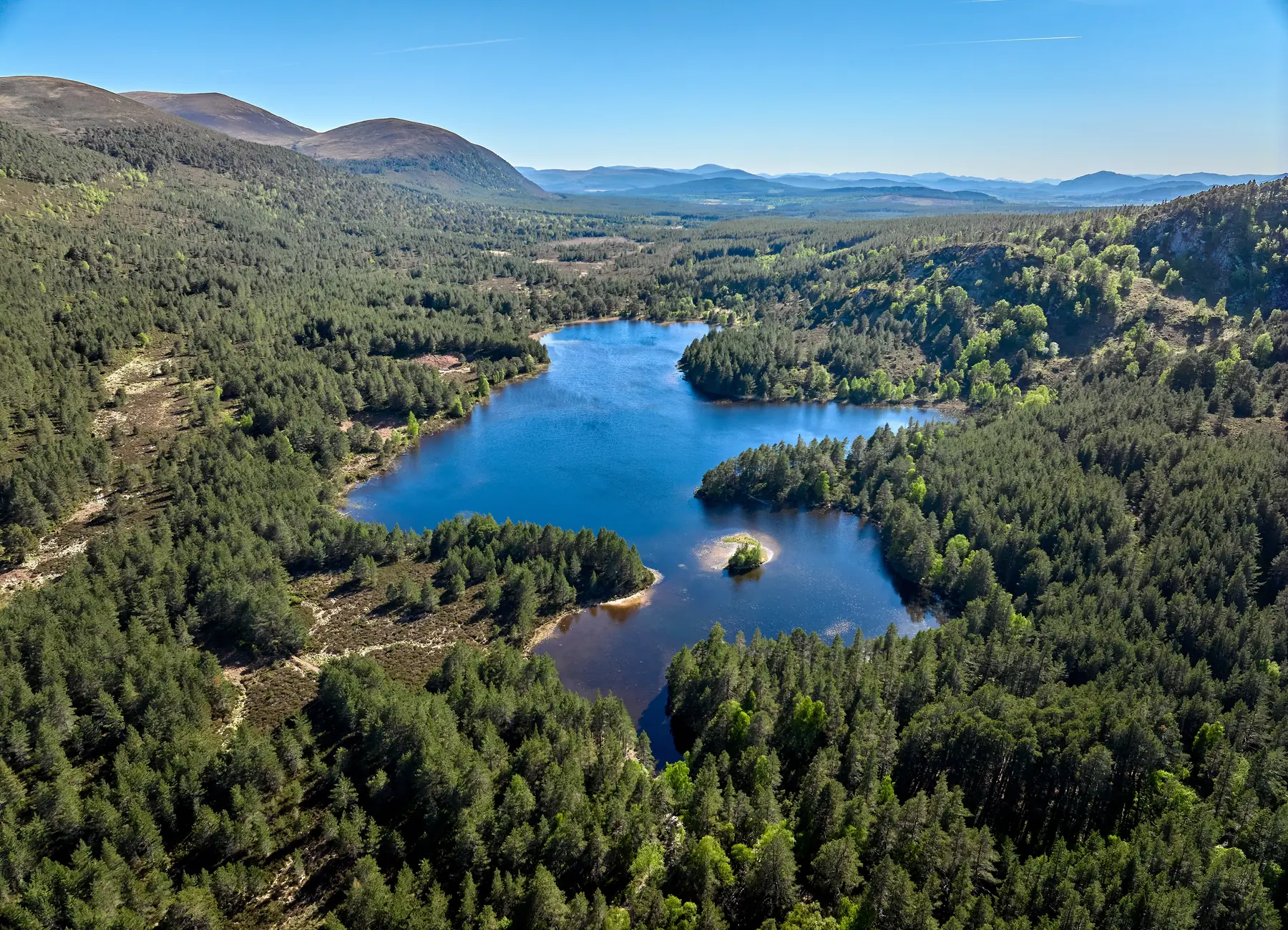
Aviemore sits on the A9 halfway between Perth and Inverness, which makes it one of the best-connected bases in the Highlands. Inverness and Loch Ness are under an hour north, Speyside’s whisky country lies north-east down the river, and the string of Badenoch villages south along the Spey has more history per mile than anywhere else in the central Highlands.
A note on driving. The A9 is fast but heavily average-speed-camera’d, single carriageway for long stretches and slow behind lorries; allow more time than the mileage suggests. The back roads — the B970 through Feshiebridge and Kincraig, and the road to Boat of Garten and Nethy Bridge — are prettier, slower and worth taking at least once.
Fifty minutes north on the A9, or a direct train with no change. The capital of the Highlands is a small, walkable city with a castle above the river, a good museum and art gallery, a covered Victorian market, the cathedral and a decent restaurant scene. It is the obvious full-day option when the weather is bad, and the shopping is what Aviemore lacks.
An hour and a quarter, going through or around Inverness. Urquhart Castle on the loch shore is the postcard, and Drumnadrochit has the monster exhibitions, boat trips and the visitor infrastructure. It is busy and unashamedly commercial; go for the loch itself, which is genuinely enormous and genuinely dark.
An hour north, just outside Inverness. The battlefield where the Jacobite rising ended in 1746 is now a National Trust for Scotland site with a substantial visitor centre and a walk across the moor itself, with the clan graves marked. It is the most affecting historic site in the Highlands, and it does not need good weather. Clava Cairns, a group of Bronze Age burial cairns, is a few minutes away and free.
Eighteen kilometres south. Ruthven Barracks stands on a green mound above the Spey — a Hanoverian barracks built after the 1715 rising and burned by the retreating Jacobites in 1746. It is free, open at all times, and floodlit at night. Kingussie itself is a handsome small town with a golf club, galleries and a good base for the Monadhliath hills. RSPB Insh Marshes, between the two, is one of the most important wetlands in Britain.
Twenty-two kilometres south. The Highland Folk Museum is a mile-long open-air museum of reconstructed Highland buildings, including an entire 1700s township that has appeared on television more than once. It is free to enter and it is one of the best days out in the Highlands. Newtonmore also has the Clan Macpherson Museum and the Wildcat Trail around the village.
Ten kilometres south. Loch Insh has watersports, hire and a beach; the Highland Wildlife Park is on the same road. A short, easy day.
Ten kilometres north-east. The village is the middle station on the Strathspey Railway, so you can arrive by steam train. Loch Garten in Abernethy Forest is the RSPB’s famous osprey site, with a nature centre and free walking in the largest surviving Caledonian pinewood in Britain.
Twelve kilometres north. The packhorse bridge here, built in 1717 and reduced by floods to a single dramatic arch, is one of the most photographed structures in the Highlands and takes two minutes to see. Landmark Forest Adventure Park is in the village and takes a whole day if you have children.
Twenty-five kilometres north-east. A planned Georgian town with a broad square, independent shops, a museum and some of the best salmon fishing on the Spey. It is the gateway to Speyside proper.
The distilleries thicken beyond Grantown — Glenlivet, Glenfiddich, Aberlour and the rest are between an hour and an hour and a half away, and the Speyside Way runs down the valley to the coast. It is a long day from Aviemore but a straightforward one, and the Kinrara distillery near town is the short version.
Braemar and Royal Deeside are on the far side of the Cairngorms — around two hours by road via the A9 and the A93, or a two-day walk through the Lairig Ghru. Fort William and Glen Coe are around two hours west. The Moray coast at Findhorn and Lossiemouth is an hour and a half north-east and has the best beaches in the north of Scotland.
Aviemore is one of the few Highland bases where this genuinely works. The station is on the main Edinburgh and Glasgow to Inverness line with roughly hourly to two-hourly trains, and Inverness is direct with no change. Kingussie and Newtonmore are stops on the same line, which puts Ruthven Barracks and the Highland Folk Museum within reach by train. The Stagecoach service from outside the station runs up the ski road to Glenmore and the mountain. Loch Ness and Culloden are the awkward ones — bus tours from Aviemore and Inverness fill that gap.
For arrival routes, including the sleeper from London, see our getting here page.
The Badenoch day, half a day or a full one. South on the B970 through Feshiebridge and Kincraig, stopping at Loch Insh and the wildlife park, then Ruthven Barracks and Kingussie, and on to the Highland Folk Museum at Newtonmore. Return on the A9. Very little driving, almost all of it free, and the most consistently underrated day out from Aviemore.
The Jacobite day. North to Culloden for the battlefield and the visitor centre, on to Clava Cairns nearby, then into Inverness for lunch and the castle viewpoint, and back down the A9. Around two and a half hours of driving in total, and the historical spine of the Highlands in one loop.
The Strathspey loop, no motorway. North-east through Boat of Garten to Loch Garten and the Abernethy forest, on to Nethy Bridge and Castle Roy, up to Grantown-on-Spey for the afternoon, and back via Dulnain Bridge and Carrbridge with a stop at the packhorse bridge. Slow roads, no crowds, and it takes in the best of the forest.
Two practical points. The A9 is the artery for all of this and it is heavily speed-camera’d, single carriageway for long stretches and prone to queues behind slow vehicles — treat published journey times as optimistic in July and August. And the big-name destinations north of Inverness, Loch Ness in particular, absorb coach traffic all day; going early or late transforms the experience.
The weather should decide the day here more than the map does. On a clear day, stay high and stay local: the Badenoch run, the Strathspey loop or the mountain itself will beat anything you can drive to. Save Inverness, Culloden and Loch Ness for the days when the cloud is on the deck — they are largely indoor, they are an hour away, and there is no point spending a rare blue morning on the A9.
The one exception is the Moray coast. When Strathspey is under cloud, the coast an hour and a half north-east is frequently in sunshine, because the weather systems that hang on the Cairngorms break up before they reach the sea. Findhorn, Lossiemouth and Cullen are the standard escape, and locals do it routinely.
Culloden and Inverness for history and a city; Kingussie, Ruthven and the Highland Folk Museum for a cheaper and quieter day that most visitors miss.
About an hour and a quarter by road to Drumnadrochit, going via or around Inverness.
Yes, directly, in around forty minutes with no change.
If you care about whisky, yes — but it is a full day, and Grantown-on-Spey makes a good halfway target if you would rather not commit to the whole run.
Braemar and Deeside are two hours by road, because the mountains are in the way. It is a fine drive over the Lecht or Glenshee, and best kept for a clear day.