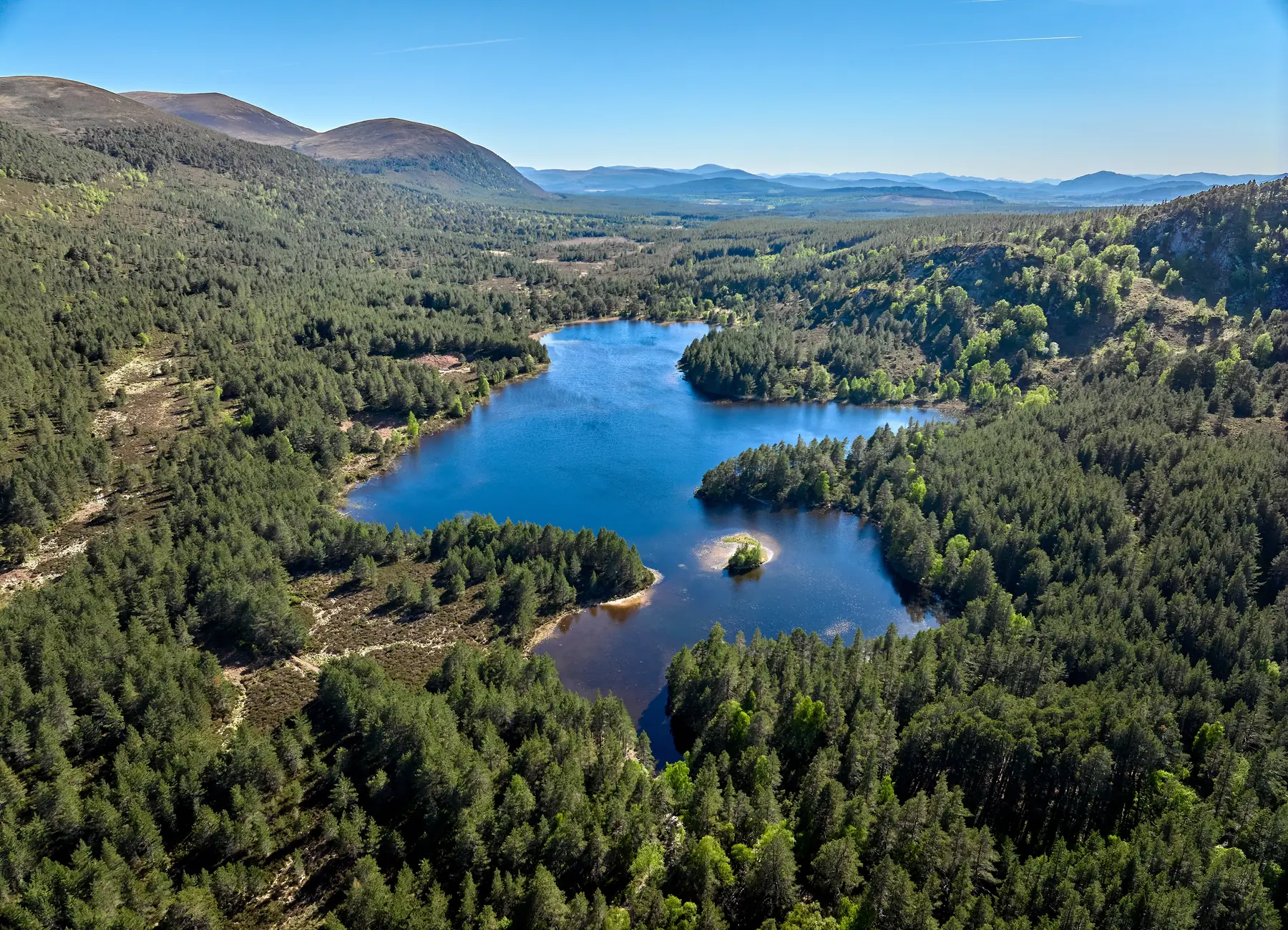
Cairn Gorm is the mountain that gave a whole range its name, and for sixty years it has been the reason Aviemore exists in its modern form. It rises to 1,245 metres on the north-west edge of the Cairngorm plateau, eleven kilometres from the town at the end of the ski road, and it carries Britain’s highest railway, one of Scotland’s five ski areas, and an approach to the largest area of arctic terrain in the country.
It is also the most misunderstood attraction in Strathspey. Visitors arrive expecting an alpine resort and find something smaller, wilder and considerably more weather-dependent. This guide explains what is actually up there, in summer and in winter.
Highland scenery became fashionable in the nineteenth century — Queen Victoria was among many visitors to Speyside — but Aviemore’s transformation came in the 1960s, when ski tows were built on the northern slopes of Cairn Gorm and a purpose-built resort village went up in the town. The ski area was small and its snow unreliable, and the resort itself was a piece of concrete brutalism that few people mourned when it was replaced. Between them, though, they gave thousands of people their first experience of winter sports, and they made Aviemore the outdoor capital of the eastern Highlands.
The funicular railway opened in 2001 and put the mountain within reach of anyone who could buy a ticket. It suffered a serious structural failure in 2018, sat idle through the pandemic years, and reopened in 2023 after a substantial public bail-out. That history matters practically as well as politically: a lot of the information online still describes the mountain as it was before 2018.
The Cairngorm Mountain Railway is the highest railway in the United Kingdom. It climbs two kilometres up the northern slopes from the Coire Cas base station to the Ptarmigan station near the summit plateau, taking a few minutes each way, and at the top there is a café, an exhibition and a viewing area. On a clear day the view runs across the Spey valley to the Monadhliath and, in the other direction, into the corries of the plateau.
Two things are worth knowing before you buy a ticket. The first is that access from the top station onto the open hill is restricted outside the ski season, so the funicular is a viewpoint rather than a shortcut up the mountain; if you want to walk on the plateau you walk from the bottom. The second is that the view is the product, and on a cloudy day you are paying to sit inside a cloud. The mountain runs webcams — look at them before you drive up.
The base station has parking, a café and a shop, and the road up from Aviemore is a proper mountain road with a good deal of altitude gained in a short distance.
The Cairngorm ski area has runs for every level, a beginners’ area near the base, tows and chairlifts on the upper mountain, and a ski school that has taught a large share of Scotland’s skiers. Snowsports here are a different proposition from the Alps: the season is short and unpredictable, the runs are relatively few, and the weather is the dominant variable.
The realistic window is somewhere between January and April, and cover varies enormously from year to year. It has long been accepted that Cairngorm cannot make a living from winter sports alone — the ski area cannot be extended without unacceptable damage to a habitat of European importance, and warming winters have made the snow less dependable. That is exactly why Aviemore has built out the year-round offering of walking, biking, watersports, wildlife and family attractions described elsewhere in this guide.
When it does snow, though, the Cairngorms deliver something the Alps cannot: an empty, arctic, genuinely wild mountain half an hour from a railway station on the main line from London.
The car park at the base station is the standard starting point for the north side of the plateau, and it is at 630 metres, which removes a great deal of climbing.
Cairn Gorm summit is three to four hours round trip on a steep, exposed path that becomes indistinct near the top. It is the most straightforward of the plateau summits and still a serious walk.
The Northern Corries — Coire an t-Sneachda and Coire an Lochain — are reached on a good path in about an hour and give you the most dramatic scenery on the mountain: crags, boulder fields and snow patches that survive most summers. Walking into the corries and back is a superb half-day that does not require you to go onto the plateau at all.
Ben Macdui, Britain’s second-highest mountain, is around seven hours round from the car park across the plateau. This is high, featureless, arctic ground where navigation is difficult in cloud and the weather can turn violently. It is magnificent and it is not a casual undertaking.
Below the mountain, Glenmore Forest Park, Loch Morlich and the Ryvoan Pass offer sheltered walking at a fraction of the commitment — see our walks guide.
The Cairngorm plateau is the coldest, windiest place in Britain. It holds arctic-alpine plants and birds found nowhere else in the country, snow lies in the corries into the summer, and wind speeds recorded on the summits are among the highest in the world. Featureless in cloud, ringed by cornices above steep drops, and reached far too easily from a car park at 630 metres, it catches out experienced walkers as well as unprepared ones.
If you want to be up there and are not confident navigating in poor visibility, hire a guide. Several Aviemore operators run guided hill days, winter skills courses and mountaineering instruction, and it is money well spent.
Ptarmigan, which change from grey to white with the seasons and give the top station its name, live on the high ground year-round. Snow bunting breed here — one of very few British sites. Mountain hares turn white in winter. Dotterel nest on the plateau in summer. And the free-ranging reindeer herd based at Glenmore grazes the slopes below, which means you may meet reindeer on the path without paying for the hill trip. Our wildlife guide covers the rest.
Getting there without a car. The Stagecoach service from outside Aviemore railway station runs up the ski road to Glenmore and the base station, which makes the mountain reachable on public transport — unusual for a Scottish ski area.
Parking at Coire Cas is charged. The Sugarbowl car park lower down serves the Chalamain Gap and the walk-in to the Lairig Ghru.
Weather. Check the mountain forecast, not the Aviemore forecast. They routinely disagree, and the difference between the two is the whole story of this mountain.
Clothing. Full winter kit from October to May, and warm layers in any month. The summit is regularly below freezing in July.
Facilities exist at the base station and the top station, and nowhere in between or beyond.
Cairn Gorm is not only a winter mountain. Downhill and cross-country mountain biking operate on the lower slopes in summer, and the forest below — Glenmore, Rothiemurchus and the Badaguish trails — carries an extensive network of routes from family tracks to technical singletrack. Bike hire is available in Aviemore and at the trailheads, and several operators run coaching sessions.
Below the ski road, Loch Morlich adds watersports, and the Rothiemurchus estate runs quad biking, clay shooting, gorge scrambling and guided walking. The pattern is deliberate: the mountain’s operators have spent twenty years building a year-round business precisely because the snow can no longer be relied on.
It reopened in 2023 after a five-year closure. Check the mountain’s own webcams and status page before travelling, since it does stop for weather and maintenance.
Not freely outside the ski season — access from the top station onto the hill is restricted. Walk from the base car park instead.
Typically January to April, but cover varies hugely year to year. Do not book a holiday around the assumption of snow.
1,245 metres, the sixth-highest mountain in Britain, on the north-west edge of the Cairngorm plateau.
The funicular and the base station are; the mountain above is not, in any conditions. Loch Morlich and Glenmore below make a much better family day — see our family guide.